

About Us
Our Story
Bridge Indigo grew out of shared meals, stained hands, and long-held friendships in the mountains of Guizhou.
Co-founders Sarah Horowitz (USA) and Liu Xiang (China) met in 2015 while working as program officers for a local nonprofit supporting ethnic minority textile artists across rural Guizhou. Over the next decade, they developed a deep love for the batik traditions of the Miao, Gejia, and Bouyi peoples— and, just as importantly, for the women who continue to carry these endangered traditions forward.
When the nonprofit dissolved, Sarah and Liu Xiang knew the work was not finished. The friendships forged and the market explorations begun invited further curiosity, care, and creativity. From that commitment, Bridge Indigo was born.
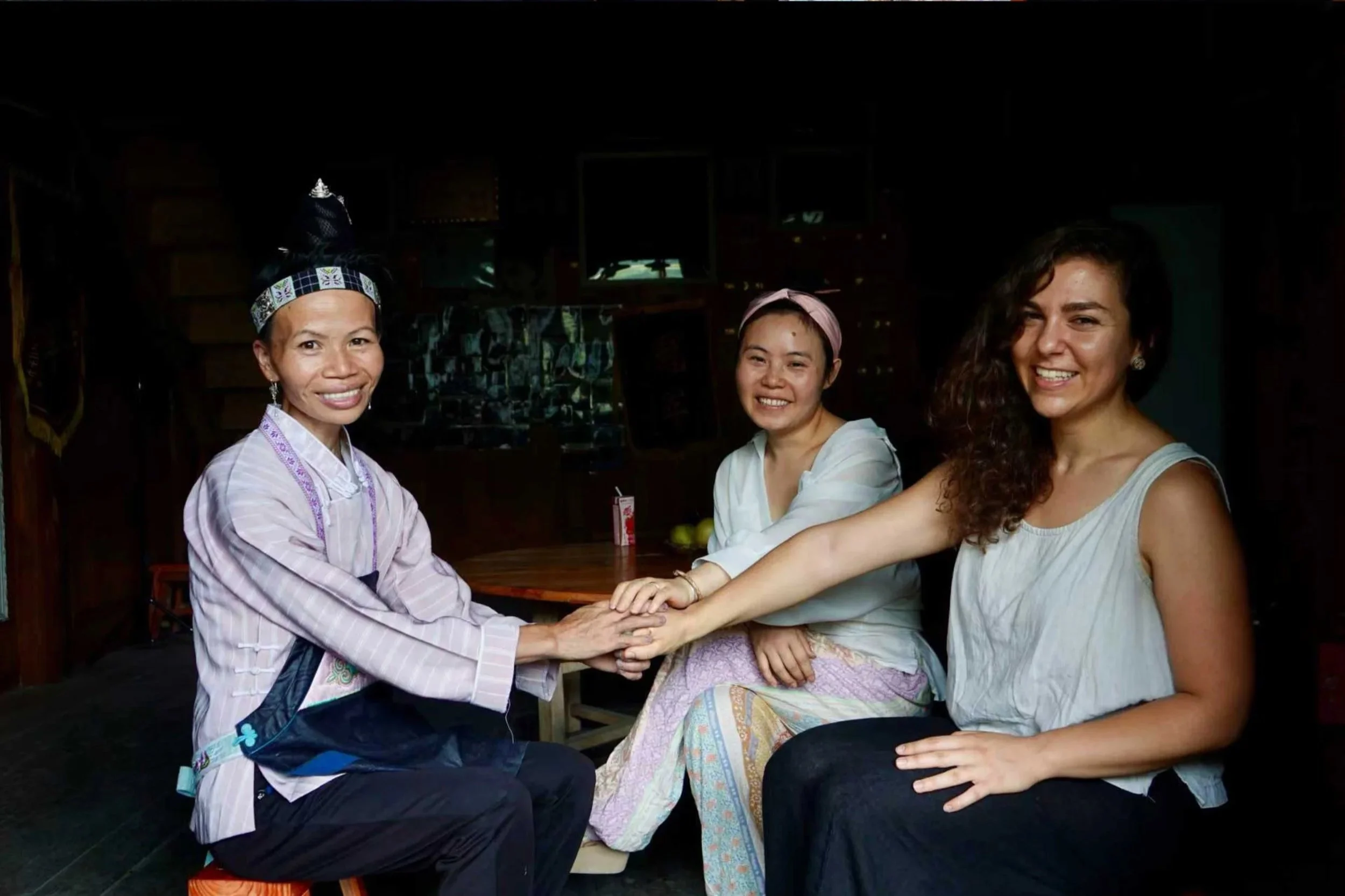
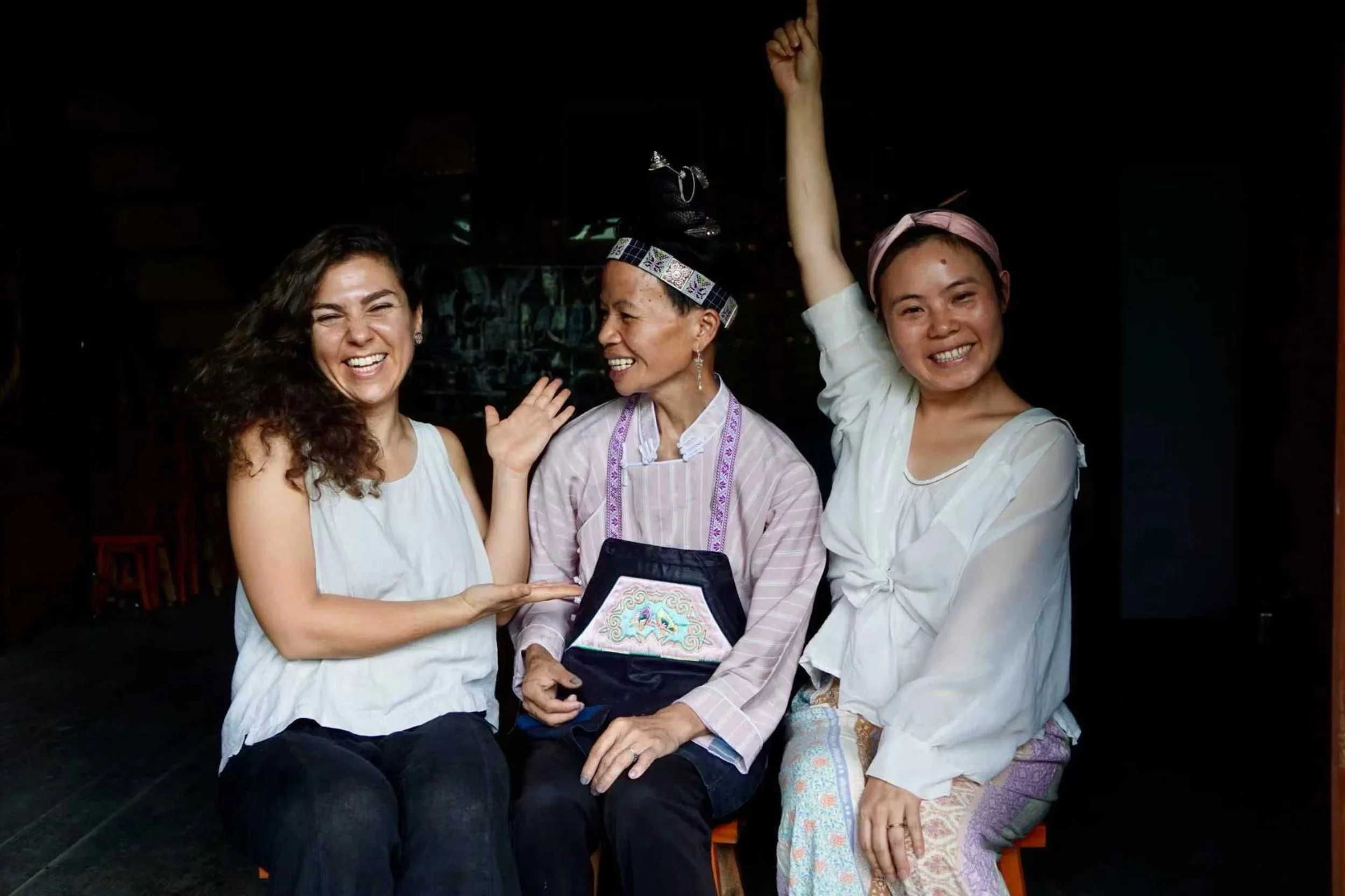
Bridge Indigo is a social enterprise devoted to building bridges— between cultures and generations, between village and city, and between past and future. Through their years of nonprofit work, the founders witnessed a difficult reality: when there are no markets for handmade textiles, many women must leave their villages— and the family, land, and cultural systems they steward— in search of wage labor in the city. Bridge Indigo exists to open fair, enduring pathways for village-based women to share their work with the wider world, without leaving their homes or cultures behind.
By supporting women as culture-bearers in their own communities, Bridge Indigo helps make space for tradition to breathe and evolve. Young people can imagine a future that includes their elders’ knowledge. Patterns, stories, and lifeways continue not as relics, but as living practice. This work builds on several years of exhibiting at the International Folk Art Market in Santa Fe, New Mexico, and is grounded in principles of fair trade. Artisans are collaborators at every step— as researchers, designers, and decision-makers. They set their own prices. They lead the creative process. Their voices shape what is made, and how it travels.

What does "Bridge Indigo" mean?
The Bridge Indigo brand logo is derived from the character ‘橋’ (qiáo, meaning ‘bridge’) written in Small Seal script. Small Seal script was the official script of the Qin dynasty (around 200 BCE), China’s first unified state; historical records indicate that wax-resist dyeing first appeared in China during this period.
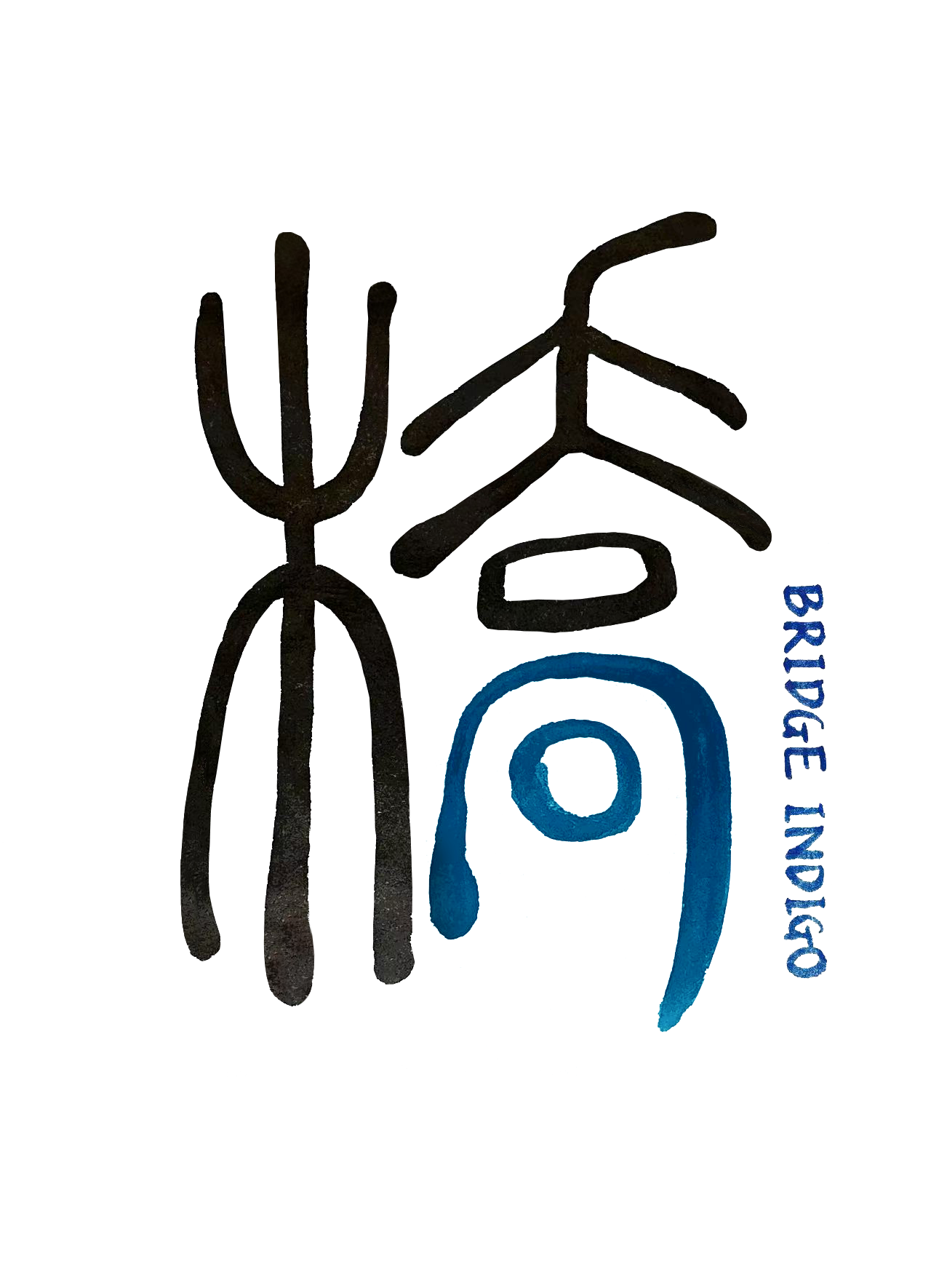
‘Bridge’ is the brand’s central motif. It connects two ends: where tradition meets the contemporary, East meets West, village meets city, and one generation meets the next.
Beneath the character for ‘bridge’ is incorporated a blue ‘同’ (tóng, meaning “sameness”). ‘同’ does not imply uniformity, but rather echoes the brand’s philosophy: celebrating diversity, sharing humanity. Dialogue between different cultures, aesthetics, and perspectives enriches our humanity and strengthens our sense of belonging to one other and the earth.